
From the Blog

What is CLP? Explanation of hazard classification and labeling of chemical substances

What is CLP? Explanation of hazard classification and labeling of chemical substances

This article explains the CLP Regulation and how chemicals must be correctly classified and labeled according to European legislation. It covers the three hazard classes, the nine mandatory CLP hazard symbols, the use of H, P, and EUH phrases, and the labeling requirements, including the signal word, UFI code, and CAS and UN numbers. It also explains who is responsible for classification and how CLP relates to REACH and SDSs. Practical examples, a sample label, and a comprehensive FAQ make this article useful for anyone working with chemical products.

Read More

Safe Handling of Chemicals: Legislation, Labeling and Transport

Safe Handling of Chemicals: Legislation, Labeling and Transport

The article “Working Safely with Chemicals: An Introduction to REACH, CLP, and ADR” provides an overview of the key European regulations on chemical safety. It explains why REACH (registration and risk assessment), CLP (classification and labeling), and ADR (transport of hazardous substances) are essential for companies working with chemicals. It also emphasizes the responsibility of users and suppliers to work safely, use correct labels, and arrange transport in accordance with legislation. The article serves as a starting point for a broader knowledge series.

Read More

Denatured alcohol – what is it and why is it used?

Denatured alcohol – what is it and why is it used?

Denatured alcohol is regular ethanol that producers intentionally make undrinkable by adding substances such as isopropanol (IPA), methyl ethyl ketone (MEK), Bitrex, or methanol. These additives make the alcohol bitter, unpleasant, or toxic, so no one can drink it and no excise duty has to be paid. This keeps ethanol affordable and available for technical applications, such as cleaning, degreasing, cleaning electronics, as a solvent in laboratories and industry, and as a fuel for methylated spirits.
Chemically the effect remains the same, but due to denaturing the alcohol falls outside the liquor laws.
This article explains how and why ethanol is denatured, which substances are used for this process, and what you can safely use this alcohol for—from household use to professional laboratory work.
Read More

Cleaning electronics: safely clean your laptop, keyboard and circuit board

Cleaning electronics: safely clean your laptop, keyboard and circuit board

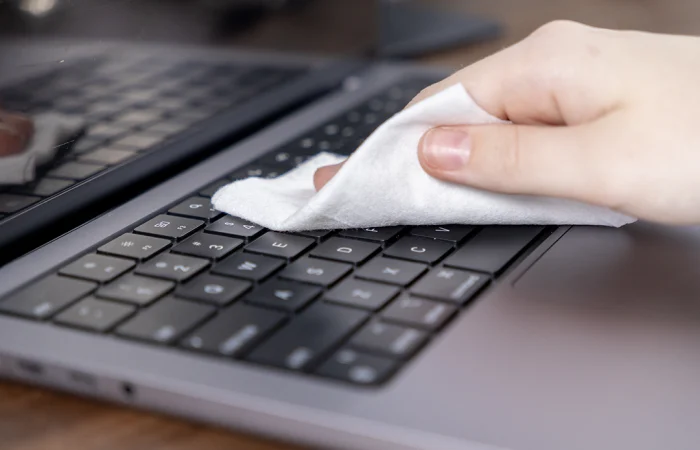
Cleaning a laptop, keyboard, or circuit board doesn’t have to be complicated. By regularly dusting your electronics and safely removing grease or dirt, you extend their lifespan and prevent malfunctions. Always handle with care: unplug the power, use compressed air or a soft brush for dust, and use a residue-free solvent like isopropyl alcohol for stubborn dirt or grease. This way, you’ll keep your laptop, keyboard, and circuit board in top condition.

Read More

The best products for removing glue

The best products for removing glue

This article discusses the best products for removing adhesive, including acetone, vinegar, rubbing alcohol, mineral spirits, and commercial adhesive removers. Acetone is powerful and effective on hard, non-porous surfaces, but can damage some materials. Vinegar offers a milder, more environmentally friendly alternative, suitable for wood and glass. Rubbing alcohol is versatile and safe for most surfaces, while mineral spirits is effective for paint-related adhesives on wood and metal. The article emphasizes the importance of safety precautions such as wearing gloves and ventilating the area. Commercial adhesive removers are convenient and effective, but tend to be more expensive and often contain the same solvents as cheaper alternatives, with the benefit of clear instructions.

Read More

Removing glue from stairs

Removing glue from stairs

This article provides a comprehensive guide to removing adhesive residue from stairs, regardless of the material of the stairs (wood, metal, or concrete). It begins with the important step of removing as much of the covering as possible before tackling the adhesive. It then discusses specific methods and products for each surface type. For wood stairs, it recommends using white vinegar or mineral spirits, while acetone and commercial adhesive removers are effective on metal stairs. Concrete stairs can be treated with a sander, heat, or solvents. The article also emphasizes important safety precautions, such as wearing gloves and working in a well-ventilated area, to ensure a safe and successful cleaning.

Read More

Removing adhesive residue from various surfaces

Removing adhesive residue from various surfaces

This article explains how to safely remove adhesive residue from various surfaces such as wood, glass, plastic, metal, and fabric. Specific methods are recommended for each type of surface, such as using cleaning vinegar on wood and glass, isopropyl alcohol on plastic, and acetone on metal. It is important to test products on a small, inconspicuous area of the surface first to avoid damage. Important safety precautions are also discussed, such as wearing gloves, working in a well-ventilated area, and avoiding contact with eyes and skin. It is also recommended to keep chemical solvents out of the reach of children and pets. This approach helps to effectively remove adhesive residue without damaging the surface.

Read More

How do you thin paint?

How do you thin paint?

The article explains why thinning paint is necessary and how to do it correctly. Thinning paint is important when paint has become too thick due to aging or evaporation of solvents. Different types of paint require different thinners: water for acrylic and latex paint, turpentine for oil and alkyd paint, thinner for automotive paints and epoxies, and white spirit for alkyd paint when using a paint sprayer. The article provides step-by-step instructions for thinning paint, including the benefits of each thinner and practical tips for an even finish. and video shows how to determine the correct thickness of paint and thin it correctly.

Read More