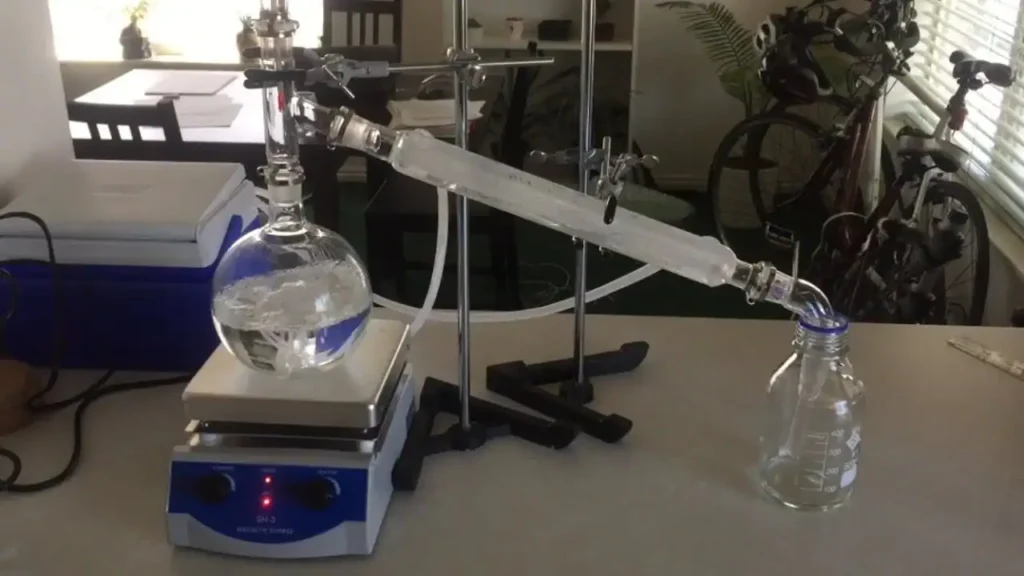
At normal atmospheric pressure, ethanol and water form an azeotrope at approximately 95.6 percent ethanol by mass. Find out why conventional distillation cannot overcome this limit and how additional drying works.
Isopropyl alcohol (IPA) is used for certain industrial cleaning and degreasing applications. Suitability depends on the material, the contamination and the supplier’s instructions. Rapid evaporation does not guarantee a residue-free result or protection against corrosion. Consider the risks of flammable vapours and consult the safety data sheet. IPA is not suitable for consumption.
The article "Safe Handling of Chemicals: An Introduction to REACH, CLP and ADR" provides an overview of the main European regulations on chemical safety. It explains why REACH (registration and risk assessment), CLP (classification and labelling) and ADR (transport of dangerous goods) are essential for companies that work with chemicals. It also emphasises the responsibility of users and suppliers to work safely, use the correct labels and arrange transport in accordance with the law. The article serves as a starting point for a broader knowledge series.
Denatured alcohol is regular ethanol that producers intentionally make undrinkable by adding substances such as isopropanol (IPA), methyl ethyl ketone (MEK), Bitrex, or methanol. These additives make the alcohol bitter, unpleasant, or toxic, so no one can drink it and no excise duty has to be paid. This keeps ethanol affordable and available for technical applications, such as cleaning, degreasing, cleaning electronics, as a solvent in laboratories and industry, and as a fuel for methylated spirits.
Chemically the effect remains the same, but due to denaturing the alcohol falls outside the liquor laws.
This article explains how and why ethanol is denatured, which substances are used for this process, and what you can safely use this alcohol for—from household use to professional laboratory work.
Boiled linseed oil, a natural product from flax seeds, is ideal for protecting wood, metal and concrete from moisture and weather. Before treating wood, the surface must be clean, dry and free of grease. Sand the wood, apply the oil with a brush and let it soak in for 30 minutes. Treat dry areas again and remove excess oil with a lint-free cloth. Then let the wood dry for 24 hours. Linseed oil should not form a layer but should be absorbed into the wood. Pay attention to safety when storing used cloths to prevent spontaneous combustion. Regular maintenance is necessary for lasting protection and a beautiful finish.
Wood lyeing is a process where wood is treated with a caustic solution such as sodium hydroxide or potassium hydroxide to remove impurities and give it an aged appearance. This step-by-step plan includes preparing the wood, applying the lye solution, neutralizing and rinsing, and drying and finishing. Safety precautions are essential due to the toxicity of the lye. Although it can produce beautiful results, there are disadvantages such as the loosening of wood joints, the need for sanding, and the unsuitability of MDF and chipboard. Follow the guidelines carefully for a safe and successful result.
Bonding Lego with methyl ethyl ketone (MEK) creates a strong and durable bond between bricks, thanks to the chemical properties of the ABS plastic used to make Lego bricks. MEK melts the ABS surfaces, creating a strong chemical bond. This prevents Lego creations from falling apart, for example when children play with them. Although MEK is effective, it poses health risks and requires careful handling and safety precautions. Alternatives such as plastic glue, superglue and epoxy glue also provide strong bonds without MEK's aggressive properties. By using the right adhesive and techniques, durable and robust Lego constructions can be made.
As a leading wholesaler, DutchChems offers a wide range of chemicals, suitable for both large and small projects. The company stands for quality, safety and compliance with strict regulations, while catering to a diverse customer base. With more than 200 products, including acids, bases, metals and organic compounds, DutchChems meets the needs of industry, education and research. The emphasis is on safe and sustainable use of chemicals, supported by expert advice and an informative helpdesk. DutchChems strives for innovation and safety in the chemical sector.
This article delves into the essential world of antifreeze, highlighting the various types such as ethylene glycol and propylene glycol, and their specific applications in vehicle cooling systems and beyond. It emphasizes the importance of antifreeze in both hot and cold climates, and not just as protection against freezing. In addition, the article addresses common misconceptions such as the interchangeability of antifreeze products and the need for regular replacement to ensure optimal performance. The article concludes with the importance of safe use and environmental impacts of antifreeze, promoting awareness and responsibility among the reader.
We use necessary cookies to make our online shop work properly. With your consent, we also use cookies for statistics. Choose Accept to allow all available categories, or view your preferences to make your own choice. You can change your choice at any time via Cookie settings.
Necessary
Always active
Technical storage or access is strictly necessary for the legitimate purpose of enabling the use of a specific service explicitly requested by the subscriber or user, or solely for the purpose of transmitting a communication over an electronic communications network.
Preferences
Technical storage or access is necessary for the legitimate purpose of storing preferences that were not requested by the subscriber or user.
Statistics
Technical storage or access used exclusively for statistical purposes.Technical storage or access used exclusively for anonymous statistical purposes. Without a subpoena, voluntary compliance by your internet service provider, or additional records from a third party, information stored or retrieved solely for this purpose usually cannot be used to identify you.
Marketing
Technical storage or access is required to create user profiles for sending advertising, or to track users on this website or across websites for similar marketing purposes.