































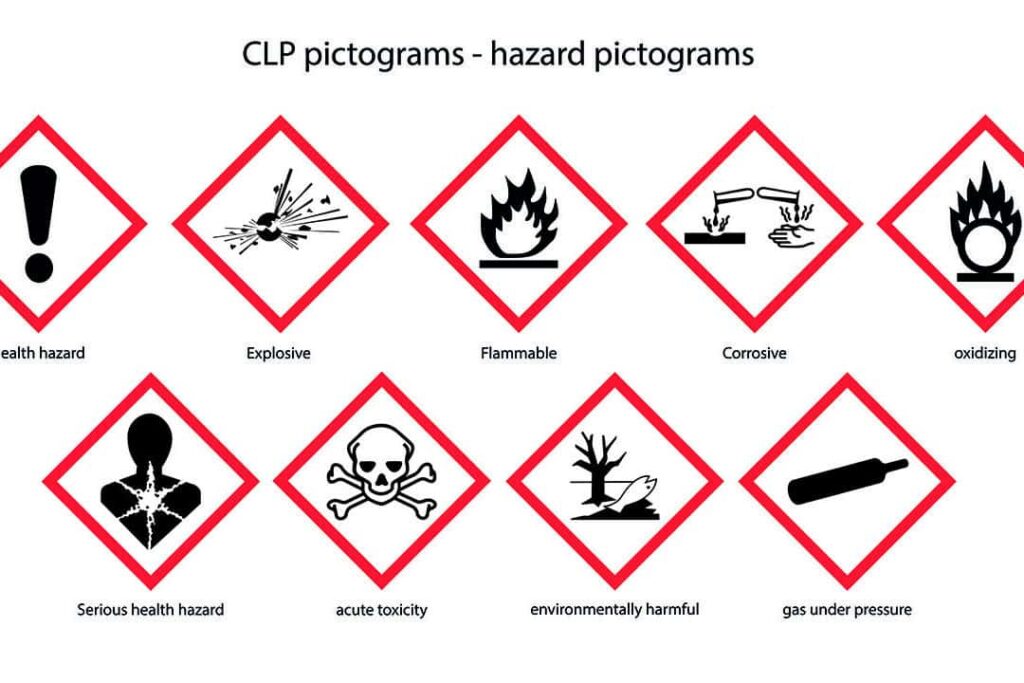
CLP hazard pictograms for chemical labelling under European legislation
0

What is CLP? Explanation of hazard classification and labeling of chemical substances

This article explains what the CLP Regulation entails and how chemical substances must be correctly classified and labelled under European legislation. It covers the three hazard classes, the nine mandatory CLP hazard pictograms, the use of H, P and EUH statements, and labelling requirements including the signal word, UFI code, and CAS and UN numbers. It also explains who is responsible for classification and how CLP relates to REACH and safety data sheets (SDSs). Practical examples, a sample label and an extensive FAQ make the article useful for everyone who works with chemical products.
Continue reading
Safe Handling of Chemicals
0

Safe Handling of Chemicals: Legislation, Labeling and Transport

The article "Safe Handling of Chemicals: An Introduction to REACH, CLP and ADR" provides an overview of the main European regulations on chemical safety. It explains why REACH (registration and risk assessment), CLP (classification and labelling) and ADR (transport of dangerous goods) are essential for companies that work with chemicals. It also emphasises the responsibility of users and suppliers to work safely, use the correct labels and arrange transport in accordance with the law. The article serves as a starting point for a broader knowledge series.
Continue reading
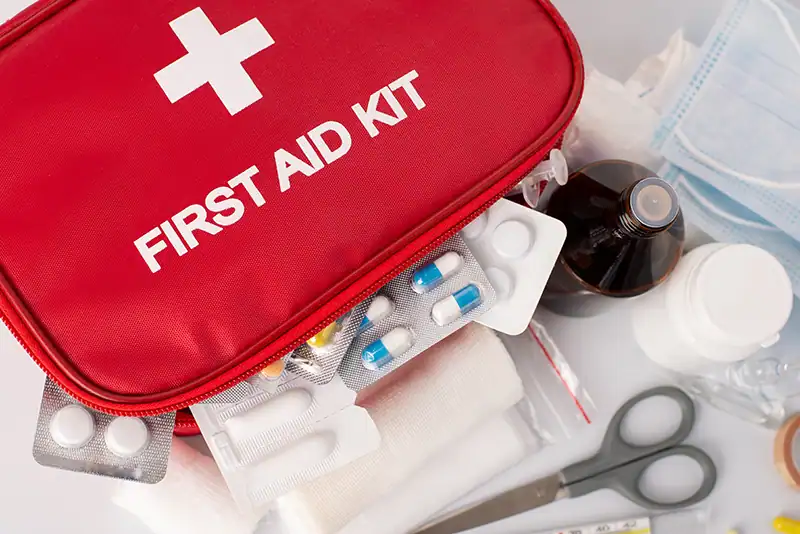
Open first aid kit with neatly arranged supplies such as adhesive bandages, dressings, scissors, gloves, and antiseptic wipes.
0

What’s in a first aid kit?

A first aid kit is essential for providing first aid in case of accidents at home, at work, during travel or sporting activities. A basic first aid kit contains plasters, bandages, disinfectants, instruments such as scissors and tweezers, protective equipment such as gloves, and essential medications including painkillers and anti-allergy medications. It is important to personalize the kit to personal or specific needs and check it regularly for expired products. A well-equipped first aid kit, combined with knowledge of how to use it, can be crucial in emergency situations.
Continue reading
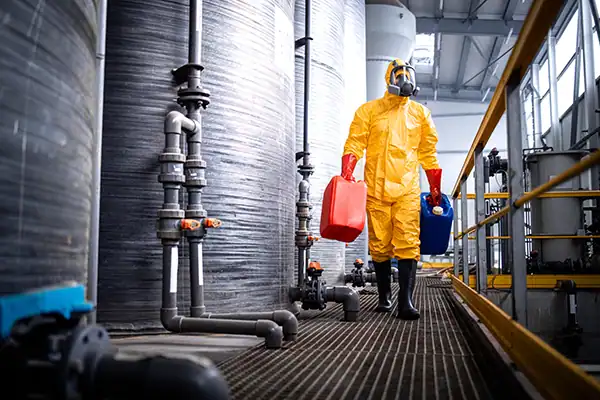
A worker in chemical-resistant coveralls and safety boots for workplace protection.
0

Safety Classes in Safety Boots: Choose the Right Protection

Safety boots are essential for workplace protection in sectors such as construction and industry. They are categorised into safety classes ranging from S1 for basic protection and S2 for wet conditions to S5 for industrial applications. The choice of boot should account for specific workplace risks and comfort. It is crucial to choose quality boots that meet the appropriate standards. DutchChems offers high-quality S5 safety boots that protect against a range of hazards. Workplace safety is of paramount importance.
Continue reading
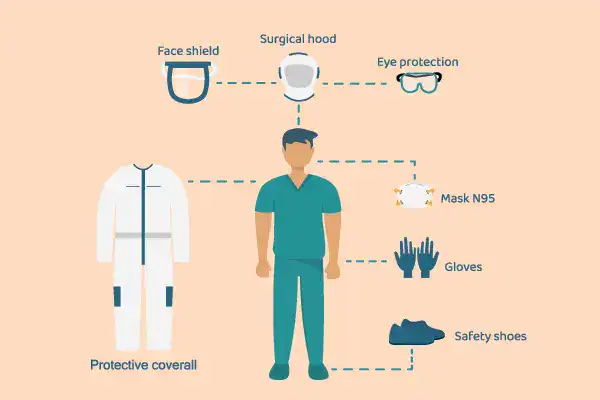
A schematic overview of various items of personal protective equipment (PPE) and safety products.
0

Personal Protective Equipment (PPE) in the Workplace

Personal protective equipment (PPE) is essential for employee safety. It protects against physical, chemical, biological and ergonomic risks. Depending on the workplace risk, PPE ranges from simple accessories to technological devices. It is classified from category 1 for minimal risks to category 3 for life-threatening risks, with specific equipment for body parts such as the head, eyes and feet. Employers are legally required to provide PPE, and employees must use it correctly. Proper use of PPE ensures a safe working environment for everyone.
Continue reading
Person wearing a dust mask for optimal respiratory protection.
0

The Ultimate Guide to Dust Masks: Everything You Need to Know

Dust masks protect the lungs against harmful particles in the air, ranging from house dust to very harmful substances such as bacteria. There are three grades: FFP1 (for non-toxic particles), FFP2 (for harmful substances such as metal) and FFP3 (for very harmful particles such as mold spores). Abbreviations on masks indicate whether they are reusable, can withstand clogging and whether they are disposable. Additional points of attention are the breathing valve, shelf life, storage instructions and allergy information. It is important to inspect masks regularly and ensure certification. The correct choice and handling of dust masks ensure optimal protection.
Continue reading
Collage of various safety products, including eye protection, hand protection, respirators and protective clothing
0

The ultimate guide to safety products: Protect yourself at home, at work and beyond

In a world where safety comes first, safety products are crucial, both at home and at work. It is essential to protect your eyes, hands and respiratory tract from potential hazards with safety glasses, gloves and masks respectively. Protective clothing is especially important in high-risk sectors such as the chemical industry. There are also countless situations in the household where safety measures are necessary. Being prepared and investing in quality products is key to ensuring your own safety and that of your loved ones.
Continue reading