
Category: Education & Experiments

What is chemical synthesis? A student-friendly guide with simple and multi-step examples

What is chemical synthesis? A student-friendly guide with simple and multi-step examples

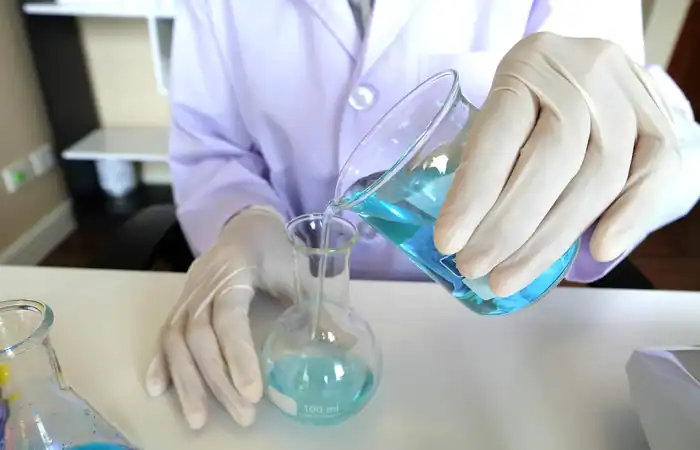
Chemical synthesis is central to modern chemistry. It describes how scientists build useful substances from simpler starting materials. Medicines, plastics, fragrances, and many other everyday products begin with these kinds of planned chemical changes. For students, it forms the bridge between reaction equations on paper and materials encountered in real life. Disclaimer: This article is […]
Read More

pH correction in the lab: what works in practice

pH correction in the lab: what works in practice

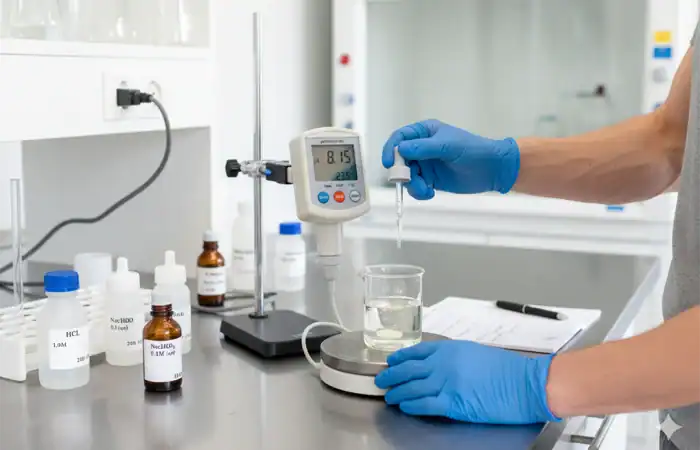
Adjusting the pH may sound like routine work, but that’s precisely where things often go wrong. One correction step too large and your sample suddenly behaves differently than expected. This is reflected in solubility, reaction rate, extractions, and ultimately in your measurement results. Therefore, pH correction is not an afterthought, but a critical step in […]

Read More

Extending the life of wooden furniture indoors

Extending the life of wooden furniture indoors

Wooden furniture will remain beautiful for years with simple maintenance. Protect it from moisture, sunlight, dust, heat, and everyday scratches. Maintain indoor humidity, keep furniture away from damp areas, and clean it regularly with a soft cloth. Protective finishes like wax, varnish, or oil help prevent damage. Boiled linseed oil is particularly effective because it nourishes the wood and dries quickly. With regular cleaning, inspection, and a good finish, your wooden furniture will remain strong, shiny, and long-lasting.

Read More

Why Ethanol Cannot Be Distilled Above 96%

Why Ethanol Cannot Be Distilled Above 96%

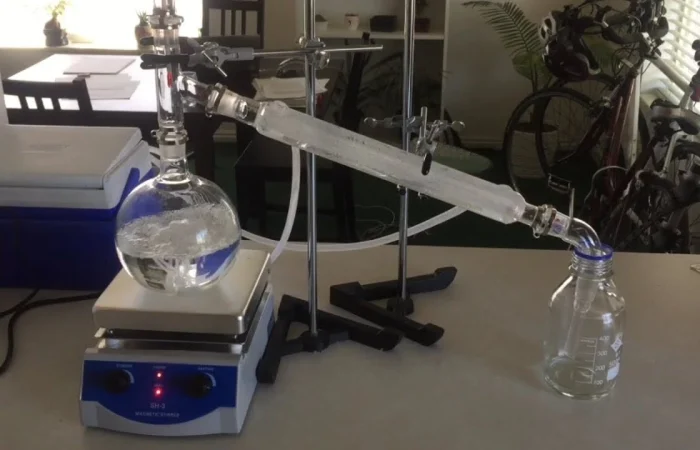
Ethanol cannot be distilled above 95-96% ethanol because it forms an azeotrope with water. At this point, the liquid and vapor have the same composition, making distillation impossible to separate. Even with higher heat, the purity will not increase. Industries requiring near-100% ethanol use additional drying methods such as molecular sieves, special distillation with added chemicals, or vacuum distillation. These techniques break the azeotrope and produce anhydrous ethanol for chemical, industrial, and laboratory use.

Read More

Safe Handling of Chemicals: Legislation, Labeling and Transport

Safe Handling of Chemicals: Legislation, Labeling and Transport

The article “Working Safely with Chemicals: An Introduction to REACH, CLP, and ADR” provides an overview of the key European regulations on chemical safety. It explains why REACH (registration and risk assessment), CLP (classification and labeling), and ADR (transport of hazardous substances) are essential for companies working with chemicals. It also emphasizes the responsibility of users and suppliers to work safely, use correct labels, and arrange transport in accordance with legislation. The article serves as a starting point for a broader knowledge series.

Read More

Denatured alcohol – what is it and why is it used?

Denatured alcohol – what is it and why is it used?

Denatured alcohol is regular ethanol that producers intentionally make undrinkable by adding substances such as isopropanol (IPA), methyl ethyl ketone (MEK), Bitrex, or methanol. These additives make the alcohol bitter, unpleasant, or toxic, so no one can drink it and no excise duty has to be paid. This keeps ethanol affordable and available for technical applications, such as cleaning, degreasing, cleaning electronics, as a solvent in laboratories and industry, and as a fuel for methylated spirits.
Chemically the effect remains the same, but due to denaturing the alcohol falls outside the liquor laws.
This article explains how and why ethanol is denatured, which substances are used for this process, and what you can safely use this alcohol for—from household use to professional laboratory work.

Read More

Make your own slime with Borax (practical preparation)

Make your own slime with Borax (practical preparation)

Making slime with borax and PVA glue is a fun and educational experiment. This tutorial provides a step-by-step explanation, including required materials, safety precautions, and the scientific theory behind the process. The experiment demonstrates polymerization and crosslinking, where borax acts as a crosslinker and turns the glue into a stretchy slime. Clear instructions allow students to learn safely and have fun. Additionally, we answer questions about the role of borax, the effects of different amounts, and the use of other types of glue, giving a better understanding of the chemical reactions.

Read More

Making elephant toothpaste (practical preparation)

Making elephant toothpaste (practical preparation)

The elephant toothpaste experiment is a popular chemical demonstration in which hydrogen peroxide is broken down by a catalyst, resulting in spectacular foam production. This experiment is ideal for educational purposes and demonstrates how catalysts work. Materials include hydrogen peroxide (3% or 12%), liquid dish soap, dry yeast, food coloring, and warm water. Safety precautions, such as wearing gloves and goggles, are essential. The reaction produces a large amount of foam, making the experiment a fun and educational experience for children and adults.

Read More