




Estimated reading time: 10 minutes
A clogged sink happens to almost everyone. You turn on the faucet and the water stays in the sink, or drains far too slowly. It’s instantly recognizable and incredibly frustrating, especially when you’re about to do the dishes or cook. The good news: in most cases, you can unclog the sink without a plumber. This article explains exactly how to tackle a clogged kitchen drain yourself, which methods really work, what you shouldn’t do, and when drain cleaner granules are an option.
Table of contents
Why does your sink get clogged?
A kitchen blockage rarely happens overnight. It’s a gradual process where debris builds up in the drain and pipes. The most common causes:
Grease and oil are the biggest culprits when your kitchen drain gets clogged. Liquid grease seems harmless when you rinse it away, but as soon as it cools, it solidifies and adheres to the inside of the pipes. This layer of grease thickens and attracts other debris, which can eventually block the drain completely.

Food particles like grains of rice, pasta scraps, coffee grounds, and vegetable scraps easily slip through the grate of your sink. These small particles stick to the layer of grease that has already formed in the pipe. The result: an increasingly stubborn clog.
Soap scum and limescale can build up in the drain, especially when combined with hard water. These substances adhere to the walls of the pipes and gradually reduce flow.
Older sewer systems sometimes also play a role. Especially in older homes, pipes are sometimes constructed with cast iron pipes that clog more quickly due to rust combined with dirt.
Sound familiar? Then your sink is clogged with grease and food debris, the most common situation. Fortunately, you can often fix this yourself.
Unclogging your sink step by step
Before you start unclogging, it’s helpful to know that there are several methods you can try. Always start with the gentlest approach and work your way up to more intensive methods if the problem persists.
Method 1: Hot water and dish soap
The easiest method to try if your sink isn’t draining properly. Especially effective for sinks clogged with grease.
Boil a full kettle or pan of water. Add a generous squirt of dish soap to the sink and then slowly pour the hot water down the drain. The dish soap helps dissolve grease residue, while the hot water softens and rinses it away. Repeat this two or three times if necessary, waiting briefly in between.
Note: Do not use boiling water on PVC pipes or plastic siphons. Warm water (around 50-70°C) is safer.
Method 2: Soda and Vinegar
A proven, environmentally friendly method for unclogging drains.
Sprinkle a few tablespoons of baking soda into the drain opening. Then pour a generous splash of cleaning vinegar over it. The mixture starts to fizz, that’s a good sign. Let this work for 15 to 30 minutes. Then flush with hot water.
This method works well for mild to moderate blockages caused by grease and soap residue. The chemical reaction helps loosen dirt without damaging the pipes.
Method 3: Using the plunger
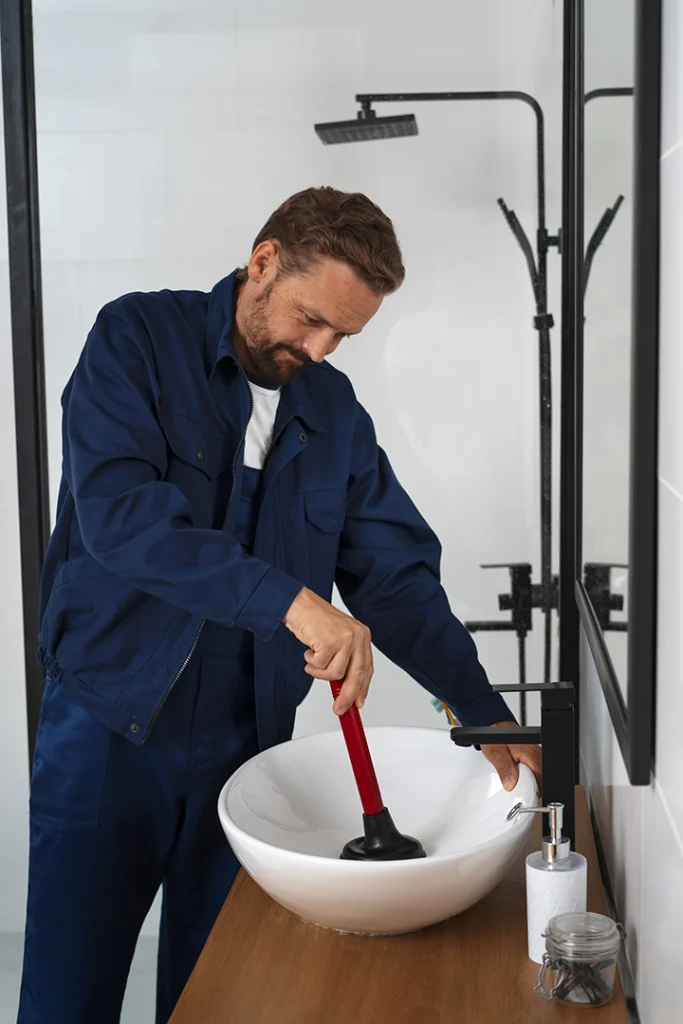
A rubber plunger (sink plunger) is also an effective tool in most cases.
Fill the sink with a few inches of water – this will increase the suction. Do you have an overflow or a second drain? Cover it with a damp cloth to maintain pressure. Place the plunger firmly over the drain and make vigorous, up-and-down pumping motions. Repeat this several times until you notice the clog dislodged.
Tip : Warm the rubber head briefly under warm water. This makes the rubber more flexible and provides a better seal.
Method 4: Cleaning the siphon
If the above methods don’t work, the blockage is likely in the trap. This is the curved pipe (swan neck) directly under your sink.
Place a bucket or container under the siphon to catch any splashing water. Then unscrew the siphon. With PVC pipes, this can often be done by hand; otherwise, use a pair of pipe wrenches and a cloth to prevent scratches. Empty the siphon and rinse all parts with warm water and a little dish soap. Pay close attention to the rubber seals (you’ll need them later). Reinstall the siphon and tighten it by hand. Turn on the tap and check for leaks.
Cleaning the siphon is often the most effective solution for stubborn blockages that cannot be cleared by popping or flushing.
Method 5: Drain Cleaning Spring
If the blockage is deeper in the pipe, a drain snake may provide a solution.
First, remove the siphon (see method 4). Carefully insert the drain snake into the drain pipe and twist back and forth when you feel resistance. This will help you loosen or pull out the blockage. Work slowly and don’t force it, as you don’t want to damage the pipe.
What not to do when your sink is clogged
There are persistent myths and risky methods that are best avoided. These often make the problem worse instead of better.
Flushing coffee grounds down the drain : Some people think coffee grounds will clean the drain. The opposite is true. Only 30 percent dissolves in water; the rest clumps and contributes to worsening the blockage.
Using chemical drain cleaners too soon : Don’t immediately resort to harsh chemicals. These contain caustic agents like sodium hydroxide or sulfuric acid, which can dissolve dirt but also corrode your pipes. Repeated use can weaken or deform PVC pipes, and older metal pipes can corrode. Furthermore, the granules can sometimes crystallize into a solid mass in the drain if there isn’t enough water, resulting in an even bigger blockage.
Flushing grease down the drain : It seems easy to flush away leftover gravy, oil, or frying fat. But this is the surest way to clog your drain. Let grease cool in an old jar or can and dispose of it with the general waste.
Using excessive force : If you try to dislodge the blockage with hard objects or excessive force, you could damage the pipes. This leads to leaks and expensive repairs.
When are drain unblocker granules suitable?
Drain unblocker granules (also called caustic soda granules) can provide a solution in certain situations, but it is important to use them correctly and safely.
Granules are most suitable when mechanical methods (popping, siphon cleaning) and natural remedies (baking soda, vinegar) haven’t worked and the blockage isn’t too deep. They work best for blockages close to the drain opening, where the granules can actually reach.
Safe use of drain unblocker granules
Always wear protective gloves and preferably safety glasses . The granules are corrosive and can cause burns on skin contact. First, remove as much standing water from the sink as possible. Sprinkle the recommended amount (usually 25% of the package) down the drain and carefully add plenty of hot water. This is crucial: without enough water, the grains can dry out and form a solid mass. Allow the product to work for a while and then rinse thoroughly with plenty of water.
When granules aren’t wise
If the blockage is deep in the pipe, the granules can’t reach the right spot. Frequent use of granules can damage pipes, especially older or fragile materials. Never mix different drain cleaners! This can cause dangerous chemical reactions.
Tips to prevent blockages
Prevention is always better than cure. With a few simple habits, you can keep your drain clear and prevent your sink from clogging.
Use a drain strainer in your sink. This simple, inexpensive tool catches food scraps and other debris before it can go down the drain.
Don’t pour grease or oil down the sink. Catch frying fat, gravy, and other fats in an old jar or can and dispose of it with the general waste. Wipe greasy pans with a paper towel before washing.
Flush weekly with hot water. Regularly run a kettle of hot water down the drain to prevent grease buildup.
Perform a monthly preventative baking soda treatment. Sprinkle half a cup of baking soda down the drain, perhaps with a dash of vinegar, and flush with hot water. This keeps the pipes clean and prevents unpleasant odors.
Clean the siphon once a quarter. By periodically disassembling and rinsing the siphon, you remove accumulated dirt before it becomes a problem.
Frequently Asked Questions
Clogged sink, what to do first?
Start with the simplest solution: pour hot water and dish soap down the drain and then try to flush it. If that doesn’t work, try baking soda and vinegar. If the water remains, it’s time to clean the trap.
How long does it take for a drain cleaner to work?
For home remedies like baking soda and vinegar, 15-30 minutes of soaking time is usually sufficient. Chemical drain cleaners often require 30 minutes, sometimes longer depending on the severity of the blockage.
Can I cause damage by unblocking the drain myself?
With care and proper techniques, the risk of damage is small. However, avoid harsh chemicals during repeated use and never force with tools.
When should I call a plumber?
Seek professional help if your own attempts are unsuccessful, if multiple drains in your home are clogged simultaneously, if water is backing up, or if you suspect the blockage is deep in the sewer. Even with recurring blockages, a specialist can determine the underlying cause.
Does cola or other soft drink work to unclog drains?
This is a myth. Cola contains phosphoric acid, which theoretically can dissolve limescale, but in practice, the concentration is far too low to clear a blockage.
Finally
A clogged sink is annoying, but usually easy to fix yourself. Always start with the gentlest method: hot water, baking soda, and vinegar, or the plunger. Work up to more intensive solutions only if necessary. Cleaning the drain trap is often the most effective approach for stubborn blockages.
Drain cleaner granules can be an option when other methods don’t work, provided you use them safely and according to the instructions. Use them sparingly and be aware of the risks of improper use.
Are your attempts unsuccessful, or are you experiencing recurring blockages? Then it’s wise to consult a professional. A professional can determine the cause and safely clear the blockage.