



















How does descaling work? The reaction between lime and acid

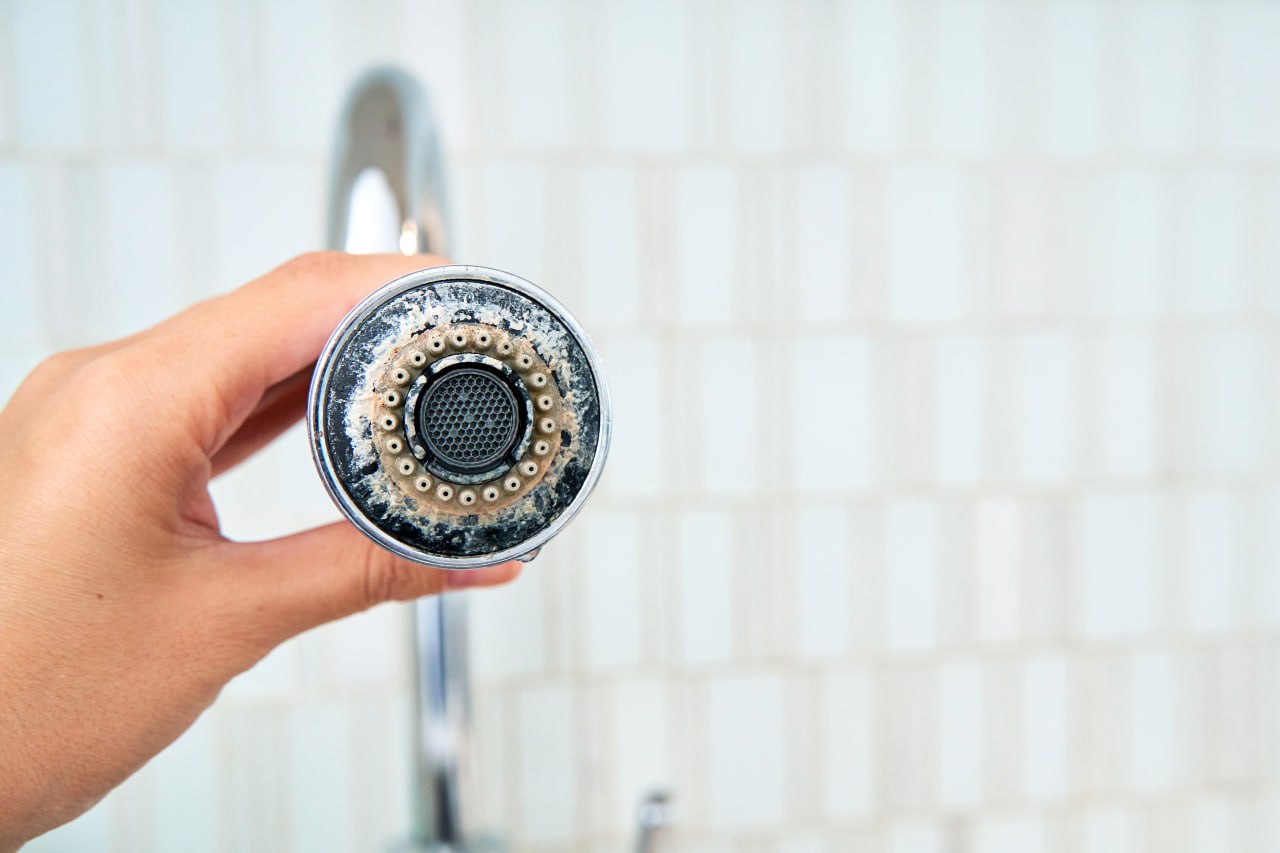
A white, hard deposit on a surface is often called limescale. If that deposit is calcium carbonate, an acid can dissolve it: hydrogen ions from the acid react with the carbonate. This releases dissolved calcium ions, water, and carbon dioxide. The choice of acid depends not only on the deposit but also on the material underneath.
How does limescale form?
Water can contain dissolved calcium ions and bicarbonate. When the equilibrium in the water shifts, for example due to heating and the escape of carbon dioxide, solid calcium carbonate can precipitate. This is a common component of the hard, white deposit recognized as lime.
However, not every white deposit is lime. A dull haze that remains on tiles shortly after grouting, for example, could be cement haze . That is a different deposit and requires a separate material assessment.
A simplified representation of limescale formation is:
Ca²⁺ + 2 HCO₃⁻ → CaCO₃(s) + CO₂(g) + H₂O
This describes a possible precipitation reaction, not how much lime will form at a specific water temperature.
What does an acid do to existing lime?
An acid yields hydrogen ions (H⁺). These react with the carbonate in solid calcium carbonate:
CaCO₃(s) + 2 H⁺(aq) → Ca²⁺(aq) + CO₂(g) + H₂O(l)
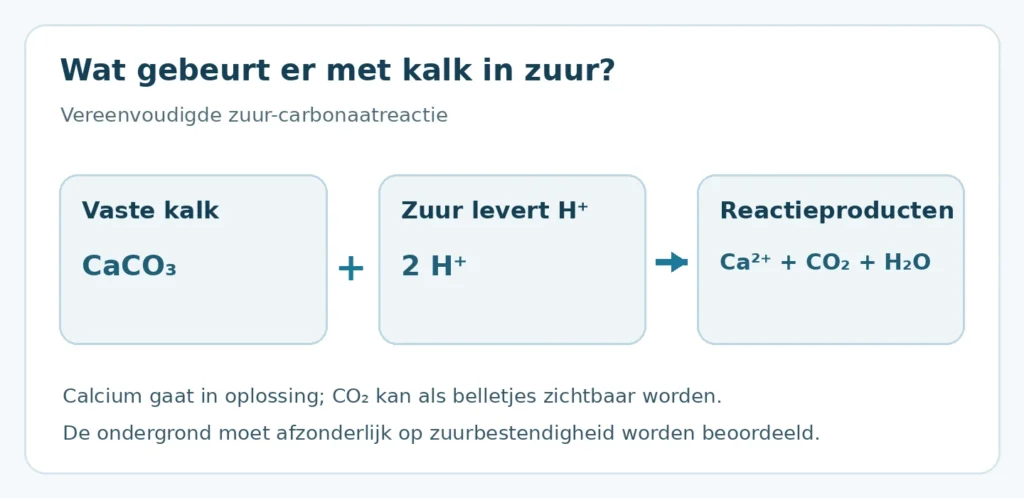
The calcium dissolves; carbon dioxide may become visible as bubbles. Bubbles do not prove that all deposits have disappeared or that the surface tolerates the acid.
With hydrochloric acid, the reaction can also be written out in full:
CaCO₃ + 2 HCl → CaCl₂ + CO₂ + H₂O
This forms calcium chloride in solution. The equation does not indicate a safe concentration, contact time, or suitable application.
Which acids can attack limescale?
Hydrochloric acid is a strong acid; the equation above shows how it reacts with calcium carbonate. Citric acid and sulfamic acid can also provide hydrogen ions. In cleaning vinegar, acetic acid is the relevant substance.
These acids can react with lime according to the same basic principle. This does not mean that every product works equally quickly or is suitable for the same surface. Concentration, formulation, contact time, and material influence the result. Therefore, a stronger or more concentrated acid is not automatically the wisest choice.
When does the acid also attack the substrate?
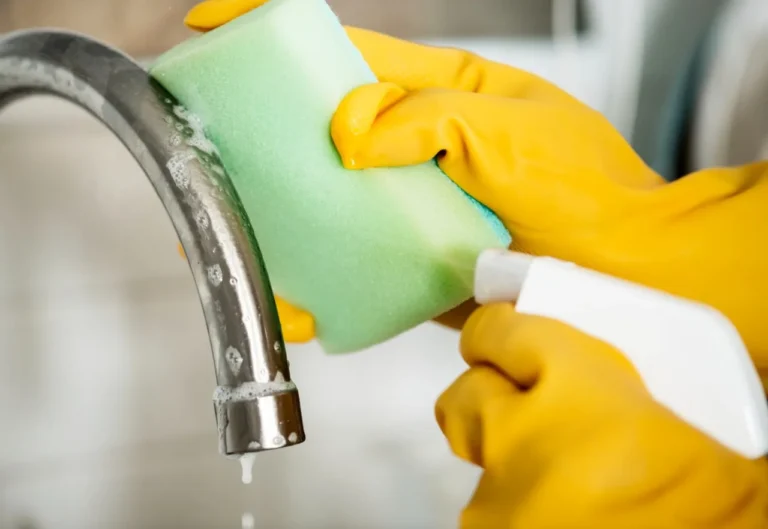
An acid does not distinguish the unwanted lime layer from a substrate that itself consists of carbonate. Lime-containing natural stone, such as marble or travertine, can therefore be affected. With metals, joints, coatings, and appliance parts, resistance also depends on the specific material and formulation. Therefore, check the manufacturer’s instructions and the product information.
Never mix an acidic agent with chlorine bleach or another chlorine-containing cleaner. This can produce dangerous chlorine gas. Also ensure that such agents are not present simultaneously on the same surface or in the same drain.
Removing is different from preventing
Descaling with acid tackles existing deposits. It does not permanently reduce the amount of calcium and magnesium in the incoming water. Preventing new deposits is another matter; water quality, temperature, and the design of the application, among other factors, play a role in this.
In short: acid can convert calcium carbonate into dissolved calcium ions, water, and CO₂. Always check first whether both the stain and the substrate are suitable for an acidic agent.