
















Why doesn’t paint adhere to metal?

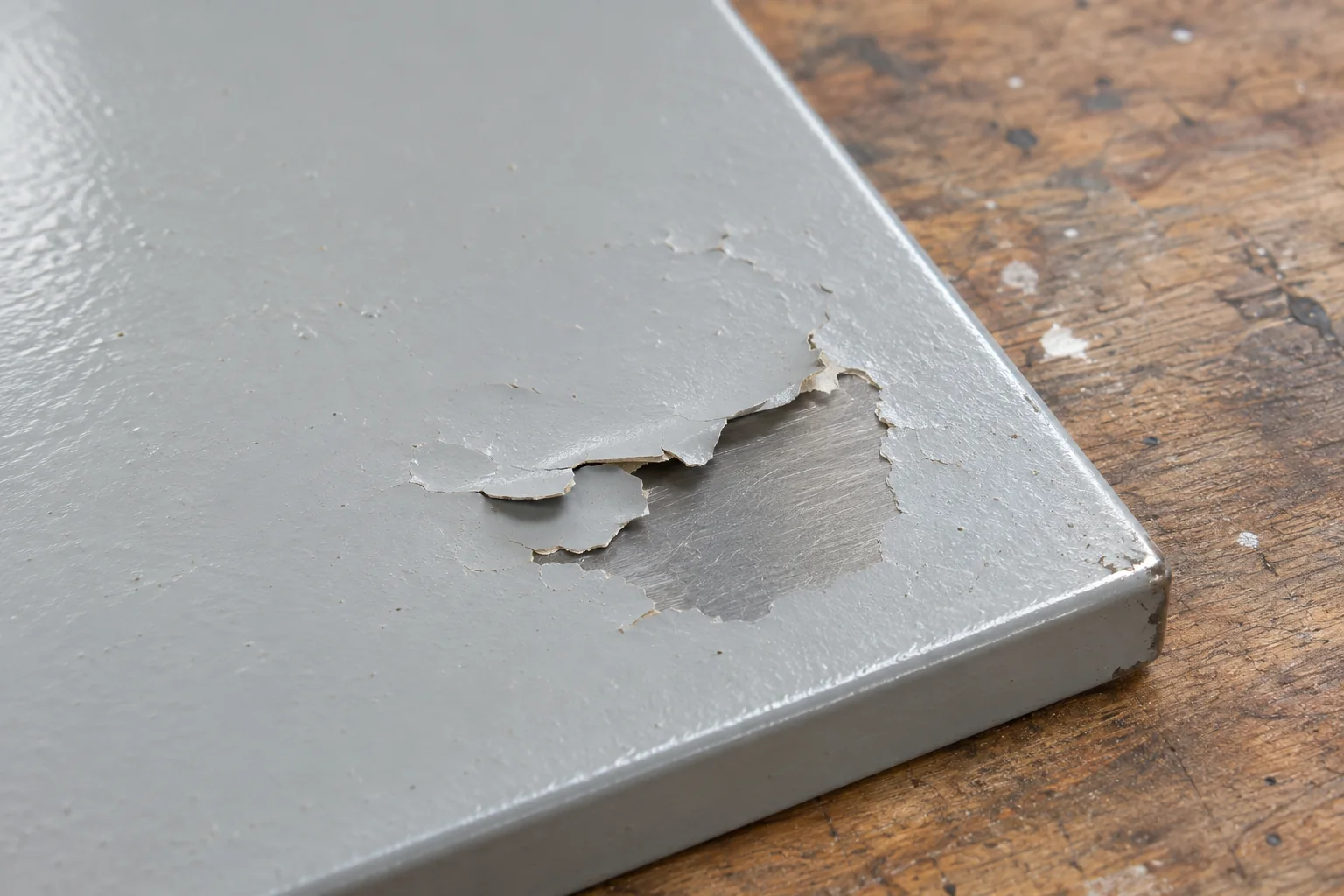
Why does paint sometimes fail to adhere to metal? When the problem appears offers a clue to the possible cause. If wet paint pulls back and leaves bare patches, it may not wet the surface properly in those areas. If a dry coat peels off later, adhesion between coats or the strength of the substrate may be inadequate. Appearance alone does not establish which cause matters most.
Why does wet paint pull away in patches?
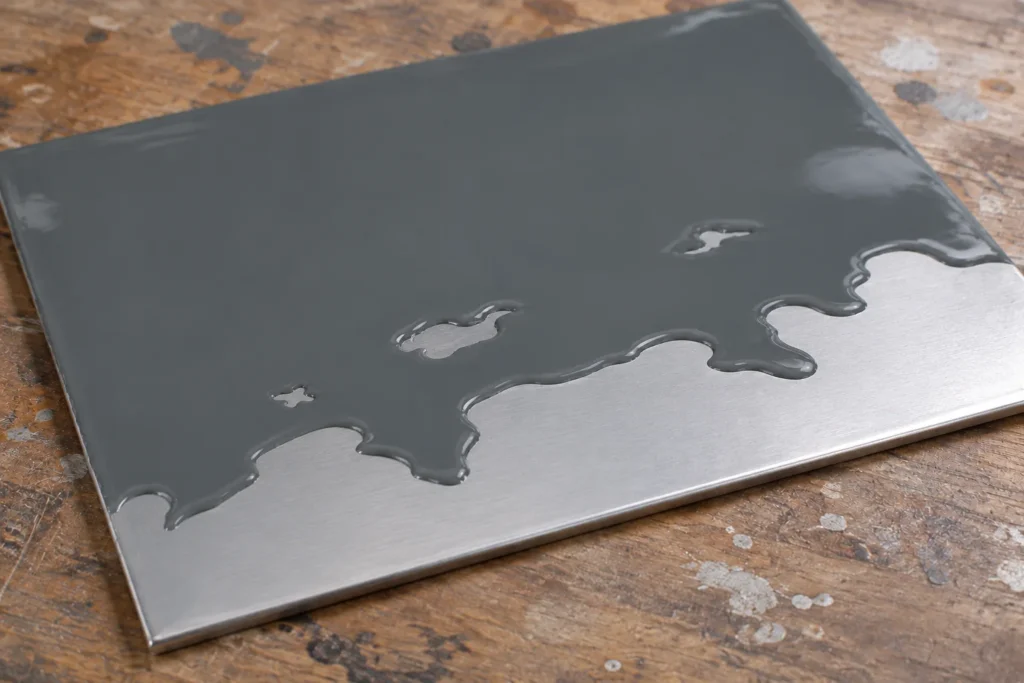
For an even coating, paint must be able to wet the surface. Oil, grease, polish residue, dust or moisture can interfere with that contact in certain areas. The paint may then pull back or fail to form a continuous film. Bare patches indicate a difference at the surface, but do not establish that any one substance is the cause. The properties of the chosen paint and its specified application also matter.
Cleaning and degreasing play a limited, specific role in this context: they can remove contamination, but cannot remove rust or secure a loose old paint layer. Isopropanol is a solvent that is also used for material-specific cleaning. The article on isopropyl alcohol in industrial cleaning provides background on this; the product information on isopropanol describes the available version. Whether a cleaning agent is compatible with an existing coating and the chosen paint system depends on the materials in question and the usage and safety information.
What does it mean if dry paint peels off?
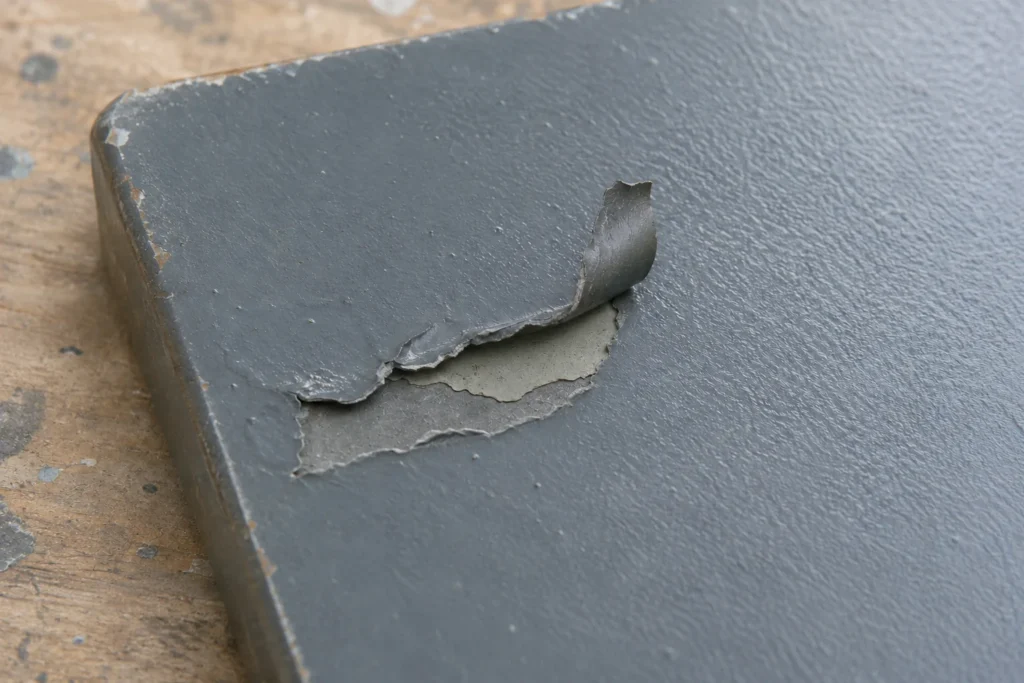
With dry paint, not only the peeling itself is important, but also the boundary where the layer detaches. If rust is visible under a flake on steel, the substrate may play a role. If an old paint layer comes off with it, that very existing layer may be the weak link. If the old layer remains in place while only the new paint peels off, a problem at the transition between the two layers is more likely. These differences provide direction for the explanation; without knowledge of the structure and condition of the layers, they remain mere indications.
A powdery or already loose old paint layer forms a weak base for new paint. A primer cannot automatically strengthen that underlying layer. This does not mean that every old layer must be completely removed: a well-adhering layer can remain in place if the new paint system is suitable for it. In the case of localized peeling, the seemingly solid paint also deserves attention; in the case of steel, rust may be hidden underneath. Degreasing does not change the condition of rust or a weak coating. Additionally, sanding dust can disrupt direct contact with the substrate.
Why is ‘metal paint’ not the same for every metal?
Steel, galvanized steel, aluminium, and stainless steel differ in surface finish and in the preparation a paint system may require. On a galvanized part with a damaged powder coating, exposed zinc and the old coating can lie side by side: suitability for one surface says nothing about the other. Moreover, in the case of hot-dip galvanized steel, the condition of the zinc surface plays a role, such as the American Galvanizers Association explains. A separate adhesion boundary also exists between primer and topcoat. If a topcoat on aluminium is easily damaged shortly after application while the primer appears to remain in place, this does not prove the cause or how the layer performs after the prescribed drying and curing time. The designation ‘metal paint’ therefore does not automatically indicate whether the layers are suitable for the metal in question and the existing coating. The technical information from the paint and primer manufacturer describes suitable substrates, preparation, layer combinations, and drying or overcoating conditions.
Adhesion is therefore not a property of the paint alone. It arises from the combination of a sufficiently firm and clean substrate, appropriate contact between the layers, and a paint system intended for that situation. In the case of an unknown old coating or persistent peeling, the condition of the relevant part and the product specifications determine further assessment; a general statement based on appearance remains limited in such cases.